Customer advocacy in 2026: Turn happy customers into your best marketing team

There are two identical software companies launching the same week. Company A spends $2 million on paid advertising, billboards, and influencer partnerships. Company B invests that same budget into creating extraordinary customer experiences and building genuine relationships.
Fast-forward eighteen months: Company A burns through ad budgets with diminishing returns, struggling to maintain growth as acquisition costs climb. Company B barely advertises at all. Instead, their customers can't stop talking about them. They share case studies, recommend the product in industry forums, and introduce the team to prospects at conferences.
The difference? Company B understood something that most businesses miss: your best marketing isn't marketing at all. Customer advocacy research shows that advocates convert prospects at 4X to 10X higher rates than brand-sent offers, while referred customers demonstrate 18% lower churn and 16% higher lifetime value.
Yet most companies treat customer advocacy as an afterthought—a nice bonus when customers happen to say good things. The reality is that customer advocacy represents the most scalable, cost-effective growth engine available to modern businesses, but only when approached systematically.
What is customer advocacy? Understanding the fundamentals
Customer advocacy means transforming satisfied customers into vocal promoters who voluntarily share authentic recommendations with others. But this definition misses the strategic depth that separates successful programs from wishful thinking.
True customer advocacy operates as a three-way value exchange. Customers receive exceptional service and outcomes that exceed their expectations. Companies gain authentic marketing that performs better than any paid campaign. And prospects get trusted recommendations from peers who understand their challenges firsthand.
Customer advocacy vs. Customer service vs. Customer success
Most organizations confuse these three distinct functions, which explains why many advocacy programs fail before they start.
Customer service solves immediate problems. When someone calls because their software crashed, customer service gets them back online. The goal is problem resolution with minimal friction.
Customer success ensures customers achieve their desired outcomes over time. Customer success teams proactively monitor usage patterns, provide training, and identify expansion opportunities. The goal is customer retention and growth through value realization.
Customer advocacy leverages satisfied customers as authentic marketing channels. Advocates create case studies, participate in sales calls, and share testimonials because they genuinely believe the product improved their business. The goal is scalable growth through peer recommendations.
These functions work together, but they require different skills, metrics, and organizational structures. Customer service needs rapid response times. Customer success needs deep product knowledge and account management skills. Customer advocacy needs storytelling abilities and relationship-building expertise.
The Customer advocacy ecosystem: Advocates, programs, and teams
Successful customer advocacy requires three interconnected components working in harmony.
Advocates themselves represent your most engaged customers—the ones who achieve exceptional results and feel emotionally connected to your brand. Obsessed customers, a core advocate segment, demonstrate remarkable promotional behaviors: recommend the brand to others, regularly share feelings about the company, and will absolutely repurchase within twelve months.
Advocacy programs provide structured ways for advocates to share their experiences. These might include referral incentives, exclusive user communities, speaking opportunities at events, or early access to new features. The most effective programs make participation feel rewarding rather than burdensome.
Advocacy teams orchestrate the entire system. They identify potential advocates, create compelling program experiences, and measure business impact. Unlike traditional marketing teams that focus on message amplification, advocacy teams focus on relationship cultivation and authentic storytelling.
The business case: Benefits and ROI of customer advocacy
Customer advocacy delivers measurable business results across multiple dimensions, but the financial impact often surprises executives who view it as a "soft" marketing tactic.
Revenue impact and business growth
The revenue numbers tell a compelling story. B2B marketing studies reveal that 54% of marketers report lower cost-per-lead from referral programs compared to other channels. 78% of B2B marketers report higher-quality leads from referral programs compared to other channels.
Brand advocates influence purchases at 50% higher rates than other customers, while three-quarters of B2B buyers consult three or more advocacy sources before making purchasing decisions.
Consider the math on customer lifetime value. If referred customers demonstrate 16% higher lifetime value and 18% lower churn rates, a company with $10 million in annual recurring revenue could generate an additional $1.6 million annually just from improving advocate-driven referrals by 20%.
But the revenue impact extends beyond direct referrals. Companies with strong customer experiences command a 16% price premium over competitors, according to customer experience research. When advocates share detailed case studies showing concrete ROI, prospects become less price-sensitive because they understand the value proposition.
Brand trust and reputation enhancement
Trust represents the foundation of all business relationships, and customer advocacy builds trust more effectively than traditional marketing channels. Over 80% of consumers trust personal recommendations more than advertising—nearly twice the trust level for banner ads, with 88% trusting recommendations from people they know.
This trust advantage compounds over time. When prospects see consistent advocacy across multiple channels—customer reviews, case studies, social media mentions, and industry presentations—they develop confidence in your brand before the first sales conversation.
The reputation benefits extend to employee recruitment, investor relations, and partnership opportunities. Companies with strong advocacy programs find it easier to attract top talent, secure favorable financing terms, and negotiate strategic partnerships because their market reputation precedes them.
Cost-effective marketing and acquisition
Traditional marketing channels face increasing headwinds. Ad blockers reduce display advertising effectiveness. Email spam filters limit outreach success. Content marketing requires massive investments to break through the noise.
Customer advocacy sidesteps these challenges because it operates through trusted relationships rather than paid media. When existing customers make introductions, success rates skyrocket. When advocates share case studies in industry forums, engagement levels exceed branded content by substantial margins.
The economic efficiency is remarkable. While paid advertising costs continue climbing—especially in competitive B2B markets—advocacy programs become more valuable as they mature. Early advocates often become your best recruiters for new advocates, creating organic program growth.
The role of a customer advocate: Responsibilities and skills
Customer advocate roles vary significantly across organizations, but successful practitioners share common responsibilities and competencies that separate them from traditional customer service representatives.
Day-to-day responsibilities of customer advocates
Customer advocates spend their time building relationships rather than just solving tickets. A typical day might include conducting customer success interviews to identify advocacy opportunities, coordinating with marketing teams to develop case studies, and facilitating connections between satisfied customers and sales prospects.
Internal advocacy represents a crucial but often overlooked responsibility. Customer advocates frequently serve as the customer voice in product development discussions, ensuring that feature requests and feedback reach the appropriate teams. They translate customer language into business requirements and help prioritize development resources based on advocate input.
Content creation and curation forms another core responsibility. Customer advocates don't just collect testimonials—they craft compelling narratives that resonate with specific prospect segments. This requires understanding buyer personas, competitive positioning, and messaging frameworks.
Program management involves designing and executing advocacy initiatives that deliver measurable results. Customer advocates track participation rates, measure program effectiveness, and optimize experiences based on advocate feedback.
Essential skills and qualifications
Successful customer advocates combine relationship-building skills with analytical thinking and business acumen.
Empathy and emotional intelligence enable advocates to understand customer perspectives and build authentic relationships. As leadership expert John C. Maxwell notes,
"People don't care how much you know until they know how much you care."
Communication skills matter enormously because advocates translate between different audiences. They help customers articulate their success stories, assist sales teams in positioning those stories effectively, and enable marketing teams to amplify authentic messages.
Business acumen helps advocates identify the most valuable advocacy opportunities and measure program impact effectively. They need to understand how advocacy activities connect to revenue outcomes and business growth.
Project management capabilities become essential as advocacy programs scale. Managing multiple case study developments, coordinating customer participation in events, and maintaining advocate engagement requires strong organizational skills.
Customer advocate career opportunities and jobs
Customer advocacy represents a growing career field with diverse advancement paths. Entry-level positions often focus on advocate recruitment and program administration. Mid-level roles involve strategic program design and cross-functional collaboration. Senior positions require business strategy development and executive stakeholder management.
Many customer advocates transition from customer success, sales, or marketing backgrounds. The role attracts professionals who enjoy building relationships and seeing direct business impact from their work. Compensation typically ranges from $60,000 for entry-level positions to $150,000+ for senior roles, with performance bonuses tied to advocacy program results.
Customer advocacy frameworks: The 3 C's and 7 pillars
Effective customer advocacy requires structured frameworks that guide program development and ensure consistent execution across diverse customer segments and business objectives.
The 3 C's of customer advocacy-
The 3 C's framework provides a foundational approach to building advocacy programs: Connection, Content, and Community.
Connection represents the relationship foundation between your organization and advocates. Strong connections develop through consistent value delivery, authentic communication, and mutual respect. Connection building starts during the sales process and continues throughout the entire customer lifecycle.
Steve Jobs emphasized the importance of proximity:
"Get closer than ever to your customers. So close that you tell them what they need well before they realize it themselves."
This level of connection enables authentic advocacy because customers trust your guidance and believe in your mission.
Content encompasses all the materials advocates create and share. This includes formal case studies, social media posts, speaking presentations, and informal recommendations. The most effective content feels authentic because it reflects genuine customer experiences rather than scripted messaging.
Content creation requires collaboration between advocates and internal teams. Customer advocates help identify compelling stories, while marketing teams provide frameworks and distribution channels. The goal is amplifying authentic voices rather than creating corporate communications.
Community brings advocates together to share experiences, provide feedback, and learn from each other. Strong communities create value for participants while generating organic advocacy opportunities. Members often become advocates for the community itself, attracting new participants and strengthening program engagement.
The 7 pillars of advocacy framework
The 7 pillars framework offers more detailed guidance for comprehensive program development:
Strategy and vision define program objectives and success metrics
Advocate identification establishes criteria for selecting program participants
Program design creates engaging experiences that deliver value to advocates
Content development produces authentic materials that resonate with prospects
Community building fosters connections between advocates and your organization
Measurement and analytics track program performance and business impact
Continuous improvement optimizes experiences based on feedback and results
Choosing the right framework for your business
Framework selection depends on organizational maturity, available resources, and business objectives. Early-stage companies often benefit from the 3 C's approach because it focuses on fundamental relationship-building without overwhelming complexity.
Established organizations with dedicated advocacy teams might prefer the 7 Pillars framework because it provides comprehensive guidance for sophisticated programs. The key is matching framework complexity to organizational capability and avoiding over-engineering simple advocacy initiatives.
Building a winning customer advocacy strategy
Strategic customer advocacy requires systematic approaches to advocate identification, program development, and performance optimization that align with broader business objectives.
Identifying and recruiting your best advocates
The most successful advocacy programs start with your most engaged customers rather than attempting broad-based recruitment. High NPS (9-10) and CSAT scores effectively identify prime advocate candidates for targeted programs.
Behavioral indicators provide more reliable advocate identification than satisfaction surveys alone. Look for customers who leave detailed feedback, attend webinars regularly, or interact frequently with your brand across multiple channels. These engagement patterns predict advocacy willingness better than general satisfaction scores.
Success metrics alignment helps identify advocates whose results resonate with prospect concerns. Customers achieving exceptional ROI, efficiency improvements, or growth outcomes make compelling advocates because they provide concrete evidence of value delivery.
Timing considerations matter enormously for recruitment success. The optimal moment often comes immediately after problem resolution or milestone achievement when customers feel most grateful and engaged. Automated systems can trigger advocacy invitations based on specific customer actions or outcomes.
Creating compelling advocacy programs
Effective programs balance advocate interests with business objectives, creating genuine value exchange rather than one-sided promotional activities.
Recognition and exclusivity motivate participation more effectively than financial incentives alone. Advocates want to feel special and valued. Programs offering exclusive access to product roadmaps, executive interactions, or industry insights generate strong engagement.
Skill development opportunities appeal to advocates seeking professional growth. Speaking coaching, thought leadership development, and industry networking events provide tangible benefits while creating advocacy opportunities.
Peer connections represent powerful motivators for busy executives. Programs that facilitate networking between advocates often generate unexpected business benefits for participants, strengthening their commitment to continued involvement.
Measuring and optimizing advocacy success
Advocacy measurement requires balancing leading indicators that predict program health with lagging indicators that demonstrate business impact.
Engagement metrics track advocate participation and program vitality. Monitor advocate recruitment rates, program activity levels, and content creation frequency. These leading indicators help identify program issues before they affect business results.
Business impact metrics connect advocacy activities to revenue outcomes. Track case study contributions to closed sales, referral conversion rates, and advocate-influenced deal velocity. Year-over-year trends in acquisition costs and retention rates provide broader business context.
Advocate satisfaction ensures program sustainability. Regular feedback collection helps identify program improvements and prevents advocate burnout. Programs that feel burdensome rather than rewarding lose effectiveness over time.
Customer advocacy marketing: Turning advocates into growth engines
Customer advocacy marketing transforms authentic customer relationships into scalable growth channels that outperform traditional marketing approaches across multiple dimensions.
Leveraging user-generated content and reviews
User-generated content provides authentic social proof that resonates more effectively than polished corporate communications. Chubbies demonstrates this approach by encouraging customers to email photos or tag the company on social media without offering rewards, generating high engagement and substantial content volume from their advocate community.
Review orchestration requires systematic approaches rather than hoping customers will spontaneously share feedback. Automated email campaigns triggered by specific customer actions—successful implementations, support ticket resolutions, or renewal confirmations—generate consistent review flows without overwhelming customers.
Content amplification helps authentic customer voices reach broader audiences. When advocates share experiences on social media or industry forums, strategic amplification through company channels increases visibility while maintaining authenticity. The key is amplifying rather than controlling the message.
Referral programs and word-of-mouth marketing
Referral programs provide structured incentives for advocates to make introductions, but design details determine success rates. Advocacy program data shows that offers shared by advocates convert at 4X to 10X higher rates than brand-sent offers, but only when programs feel natural rather than transactional.
Incentive structure should benefit both referrers and referred customers. One-sided programs that only reward existing customers often fail because they create awkward dynamics for prospects. Mutual benefit programs feel more genuine and generate higher participation rates.
Timing optimization improves referral success rates. The best moments for referral requests often occur when customers achieve specific milestones or express high satisfaction. Automated systems can identify these optimal timing windows and trigger appropriate outreach.
Relationship preservation matters more than individual referrals. Programs that pressure advocates or create negative experiences for referred prospects damage long-term relationships. Successful programs prioritize relationship quality over short-term referral volume.
Case studies, testimonials, and social proof
Case studies represent the most powerful advocacy content format because they provide detailed evidence of value delivery while telling compelling stories that prospects can envision for themselves.
Story structure determines case study effectiveness. The most compelling case studies follow problem-solution-results narratives that highlight customer challenges, implementation processes, and quantified outcomes. Generic testimonials lack the detail necessary to influence buying decisions.
Prospect alignment ensures case studies resonate with target audiences. Effective case studies feature customers that prospects admire or identify with, facing similar challenges and achieving relevant outcomes. Industry-specific case studies often outperform generic success stories.
Multi-format development maximizes case study value. Written case studies, video testimonials, and presentation formats serve different purposes and reach different audiences. The initial customer interview can generate content for multiple formats with efficient production processes.
Real-world customer advocacy examples and case studies
Examining successful customer advocacy programs across different industries reveals patterns and strategies that organizations can adapt for their specific contexts and objectives.
Subaru's customer advocacy success story
Subaru built one of the automotive industry's most effective advocacy programs by focusing on emotional connections rather than product features. Their "Share the Love" campaign demonstrates how authentic advocacy emerges from genuine brand relationships.
The program succeeded because Subaru identified customer segments that already felt passionate about the brand—outdoor enthusiasts, pet owners, and families prioritizing safety. Instead of creating artificial advocacy programs, they amplified existing customer enthusiasm through charitable giving and community events.
Customer advocates share personal stories about how Subaru vehicles supported their adventures, protected their families, or enabled their lifestyles. These authentic narratives resonate more powerfully than traditional automotive marketing because they focus on customer outcomes rather than vehicle specifications.
B2B customer advocacy champions
Salesforce Trailblazer Community demonstrates how B2B advocacy programs can scale across global customer bases. The community provides learning resources, certification programs, and networking opportunities while generating substantial advocacy benefits for Salesforce.
Members share implementation experiences, best practices, and success stories that influence prospects more effectively than corporate marketing messages. The community creates value for participants through skill development and career advancement opportunities, ensuring sustainable engagement over time.
Adobe's Customer Advocacy Program targets power users who demonstrate exceptional product proficiency. These advocates participate in product development discussions, speak at industry events, and create educational content that showcases advanced use cases.
The program succeeds because Adobe provides genuine influence over product development, making advocates feel like strategic partners rather than marketing tools. This authentic partnership generates enthusiastic advocacy that drives adoption in advocate networks.
Small business advocacy program examples
Local fitness studios often build effective advocacy programs through member challenge competitions and transformation story sharing. Successful members become advocates by sharing their fitness journeys on social media and bringing friends to trial classes.
These programs work because they celebrate genuine member achievements while creating natural sharing opportunities. The advocacy feels authentic because it reflects real results rather than paid promotions.
Professional service firms develop advocacy through client success amplification. Satisfied clients share case studies, provide references for similar projects, and make introductions to potential customers facing comparable challenges.
The most effective programs provide structured ways for clients to share their expertise, such as co-authored thought leadership articles or joint conference presentations. These opportunities benefit advocates professionally while generating authentic promotion for the service provider.
Setting up your customer advocacy department
Establishing a customer advocacy department requires careful consideration of organizational structure, technology infrastructure, and cross-functional integration to ensure program success and sustainable growth.
Organizational structure and team composition
Customer advocacy teams need diverse skills that span marketing, customer success, and project management functions. Successful departments typically include advocacy managers who build customer relationships, content specialists who craft compelling narratives, and program coordinators who manage logistics and measurement.
Reporting structure significantly impacts program effectiveness. Advocacy teams reporting to marketing often focus heavily on content creation and lead generation. Teams reporting to customer success emphasize relationship building and retention. The most successful programs maintain independence while collaborating closely with both functions.
Role definitions prevent overlap and ensure comprehensive coverage. Customer advocacy managers should focus on relationship building and strategic program development. Content specialists handle story development and material creation. Program coordinators manage logistics, measurement, and advocate communication.
Technology stack and tools
Advocate management platforms help organizations track advocate engagement, manage program participation, and coordinate advocacy activities. Companies like Ada and Wrike have used specialized platforms to automate outreach, launch comprehensive programs quickly, and scale reference activities effectively.
Content development tools facilitate collaboration between advocates and internal teams. These platforms enable efficient case study creation, testimonial collection, and multi-format content development. The goal is reducing friction for advocates while maintaining content quality.
Analytics and measurement systems track program performance and business impact. Effective systems connect advocacy activities to revenue outcomes, enabling data-driven program optimization and executive reporting.
Integration with sales, marketing, and customer success
Customer advocacy programs succeed when they integrate seamlessly with existing go-to-market functions rather than operating in isolation.
Sales integration ensures advocacy content supports active sales processes. Regular communication between advocacy and sales teams helps identify high-priority case study needs and reference requirements. Automated systems can alert sales teams when advocates are willing to participate in prospect conversations.
Marketing alignment amplifies advocacy content through appropriate channels while maintaining authenticity. Marketing teams help advocates reach broader audiences through content promotion, event speaking opportunities, and thought leadership development.
Customer success coordination identifies advocacy opportunities and ensures program participation doesn't burden customer relationships. Customer success teams often provide the best advocate recruitment because they understand customer satisfaction levels and business outcomes.
Common customer advocacy challenges and solutions
Customer advocacy programs face predictable challenges that organizations can anticipate and address through strategic planning and systematic execution approaches.
Overcoming advocate engagement issues
Advocate burnout represents the most common engagement challenge. Organizations often overwhelm their best advocates with excessive requests, leading to participation decline and relationship damage. Research shows that asking advocates to handle everything without considering their strengths, schedules, or approval processes leads to burden and low-quality output.
The solution involves strategic request management and advocate capacity assessment. Understand each advocate's strengths, availability, and preferences. Rotate requests among multiple advocates rather than relying on the same individuals repeatedly. Provide clear expectations and timelines for advocacy activities.
Participation complexity discourages advocate engagement when programs feel burdensome rather than rewarding. Complex instructions or repetitive requests cause participants to quit, especially if programs require excessive time commitments or unclear deliverables.
Successful programs maintain simplicity with single calls-to-action per communication. Focus on one or two advocacy activities rather than attempting comprehensive programs immediately. Provide clear instructions, reasonable timelines, and meaningful recognition for participation.
Scaling advocacy programs effectively
Recruitment sustainability becomes challenging as programs grow beyond early adopters. Initial advocates often represent your most engaged customers, but scaling requires systematic identification and recruitment of new participants with diverse backgrounds and use cases.
Develop multiple recruitment channels rather than relying solely on customer success referrals. Use survey data, support interactions, and product usage patterns to identify potential advocates. Create referral incentives for existing advocates to recommend program candidates from their professional networks.
Content variety and freshness prevents program stagnation as audiences grow. B2B organizations often reuse the same interview questions, asset types, or customer stories, missing audience needs for fresh formats and substance.
Rotate content formats between written case studies, video testimonials, webinar presentations, and social media features. Develop industry-specific content tracks that address unique sector challenges. Regularly refresh existing content to prevent outdated materials from confusing prospects.
Measuring ROI and proving value
Attribution complexity makes it difficult to connect advocacy activities to revenue outcomes. Customer advocacy influences buying decisions through multiple touchpoints over extended periods, complicating traditional marketing attribution models.
Implement comprehensive tracking systems that monitor advocacy touchpoints throughout sales cycles. Survey new customers about advocacy influence on their buying decisions. Track deal velocity and win rates for opportunities with advocacy exposure compared to those without.
Executive buy-in requires clear demonstration of business impact beyond activity metrics. Leadership teams want to understand how advocacy programs contribute to growth objectives and competitive positioning.
Focus on revenue-linked KPIs rather than activity counts. Report on acquisition cost improvements, retention rate increases, and deal acceleration attributable to advocacy activities. Connect advocacy program investments to customer lifetime value improvements and competitive win rate enhancements.
The future of customer advocacy: Trends and predictions
Customer advocacy continues evolving as technology capabilities expand and customer expectations shift, creating new opportunities and challenges for organizations building advocacy programs.
Emerging technologies in advocacy
Artificial intelligence enables more sophisticated advocate identification and program personalization. Machine learning algorithms can analyze customer behavior patterns, satisfaction indicators, and engagement data to predict advocacy potential more accurately than traditional scoring methods.
AI-powered content creation tools help advocacy teams develop personalized outreach, customize program experiences, and create targeted advocacy materials at scale. However, technology should enhance rather than replace human relationships that form the foundation of authentic advocacy.
Automation platforms streamline program administration while maintaining personal touch points. Automated systems can trigger advocacy invitations at optimal moments, coordinate content development processes, and measure program performance without overwhelming internal teams.
Evolving customer expectations
Authenticity demands continue increasing as customers become more sophisticated about marketing tactics. Prospects expect genuine recommendations from credible sources rather than incentivized testimonials or scripted case studies.
Successful advocacy programs will emphasize relationship authenticity and customer agency. Advocates should feel empowered to share honest experiences, including challenges and limitations, rather than delivering polished marketing messages.
Value reciprocity becomes more important as customers recognize their contribution to vendor marketing efforts. Advocacy participants expect meaningful benefits in return for their time and reputation investment.
Programs offering professional development, industry networking, and strategic influence opportunities will outperform those relying solely on recognition or minor incentives. Advocates want partnerships that advance their careers and business objectives.
Next steps for your advocacy journey
Organizations beginning customer advocacy initiatives should start with relationship foundations rather than sophisticated program structures. Focus on identifying satisfied customers who achieve meaningful results and naturally discuss your solution with peers.
Develop simple ways to capture and amplify these authentic stories through case studies, testimonials, and reference conversations. Measure impact on sales cycles and conversion rates to demonstrate program value and secure resources for expansion.
As programs mature, invest in technology platforms that enable scale while preserving relationship quality. Build cross-functional integration with sales, marketing, and customer success teams to maximize advocacy impact across all go-to-market activities.
Transform your customer advocacy with Tenet's marketing AI agent
Building a successful customer advocacy program requires more than good intentions; it demands strategic content creation, systematic execution, and ongoing optimization. While the frameworks and best practices outlined above provide the foundation, many small marketing teams struggle with creating compelling advocacy content at scale and managing multiple marketing channels effectively.
This is where Tenet makes the difference. Our marketing AI agent helps you create powerful customer advocacy content in minutes, not weeks. From case studies and testimonials to social proof campaigns and referral emails, Tenet learns your brand voice and generates high-quality advocacy materials that actually convert.
Whether you're launching your first advocacy initiative or scaling existing programs, you’ll get the marketing engine that transforms satisfied customers into powerful growth engines. With Tenet, small marketing teams can create enterprise-level advocacy content and campaigns that drive measurable results: increased referral rates, shortened sales cycles, and improved customer lifetime value through authentic customer voices.
Frequently asked questions
What is the meaning of customer advocacy?
Customer advocacy means converting satisfied customers into voluntary brand promoters who share authentic recommendations with others in their networks. Unlike traditional marketing that broadcasts corporate messages, customer advocacy amplifies genuine customer voices and experiences. Effective advocacy creates a three-way value exchange: customers receive exceptional outcomes, companies gain credible marketing, and prospects get trusted recommendations from peers facing similar challenges.
What are the 3 C's of advocacy?
The 3 C's of customer advocacy are Connection, Content, and Community. Connection represents the relationship foundation between organizations and advocates, built through consistent value delivery and authentic communication. Content encompasses all materials advocates create and share, from formal case studies to informal social media posts. Community brings advocates together to share experiences and learn from each other, creating additional value for participants while generating organic advocacy opportunities.
What is the role of a customer advocate?
Customer advocates serve as relationship builders who transform satisfied customers into vocal promoters. Their daily responsibilities include identifying advocacy opportunities through customer success interactions, coordinating case study development with marketing teams, and facilitating connections between satisfied customers and sales prospects. Advocates also serve as the customer voice in internal discussions, translating feedback into business requirements and helping prioritize development resources based on customer input.
What are the 7 pillars of advocacy?
The 7 Pillars of Advocacy framework provides comprehensive guidance for building sophisticated advocacy programs: Strategy and Vision (defining objectives and success metrics), Advocate Identification (establishing participant selection criteria), Program Design (creating engaging experiences), Content Development (producing authentic materials), Community Building (fostering connections), Measurement and Analytics (tracking performance), and Continuous Improvement (optimizing based on feedback and results).
How do you measure customer advocacy ROI?
Customer advocacy ROI measurement requires balancing leading indicators with business impact metrics. Track advocate recruitment rates, program engagement levels, and content creation frequency as leading indicators of program health. For business impact, monitor case study contributions to closed sales, referral conversion rates, and advocate-influenced deal velocity. Connect advocacy activities to acquisition cost improvements, retention rate increases, and customer lifetime value enhancements to demonstrate comprehensive ROI.
What makes customers become brand advocates?
Customers become advocates when they experience exceptional value delivery combined with emotional connection to the brand. Research shows that advocate behavior emerges from achieving meaningful business outcomes, receiving responsive support during challenges, and feeling valued as strategic partners rather than transaction sources. The timing often matters—customers are most likely to become advocates immediately after problem resolution or milestone achievement when their satisfaction peaks.
How do customer advocacy programs differ from referral programs?
Customer advocacy programs focus on authentic relationship building and story sharing, while referral programs typically center on transactional incentives for introductions. Advocacy encompasses multiple activities like case study participation, speaking opportunities, and community engagement. Referral programs specifically reward customer introductions that convert to sales. The most effective advocacy programs include referral components, but advocacy extends far beyond referrals to include content creation, thought leadership, and peer education.
What are common customer advocacy mistakes to avoid?
The most damaging advocacy mistakes include overwhelming advocates with excessive requests, creating overly complex programs with burdensome requirements, and focusing on repetitive content that fails to address diverse audience needs. Organizations also commonly mistake basic customer service for advocacy or expect instant customer loyalty without building foundational relationships. Successful programs avoid these pitfalls by prioritizing advocate experience, maintaining program simplicity, and investing in genuine relationship development over time.
See other articles
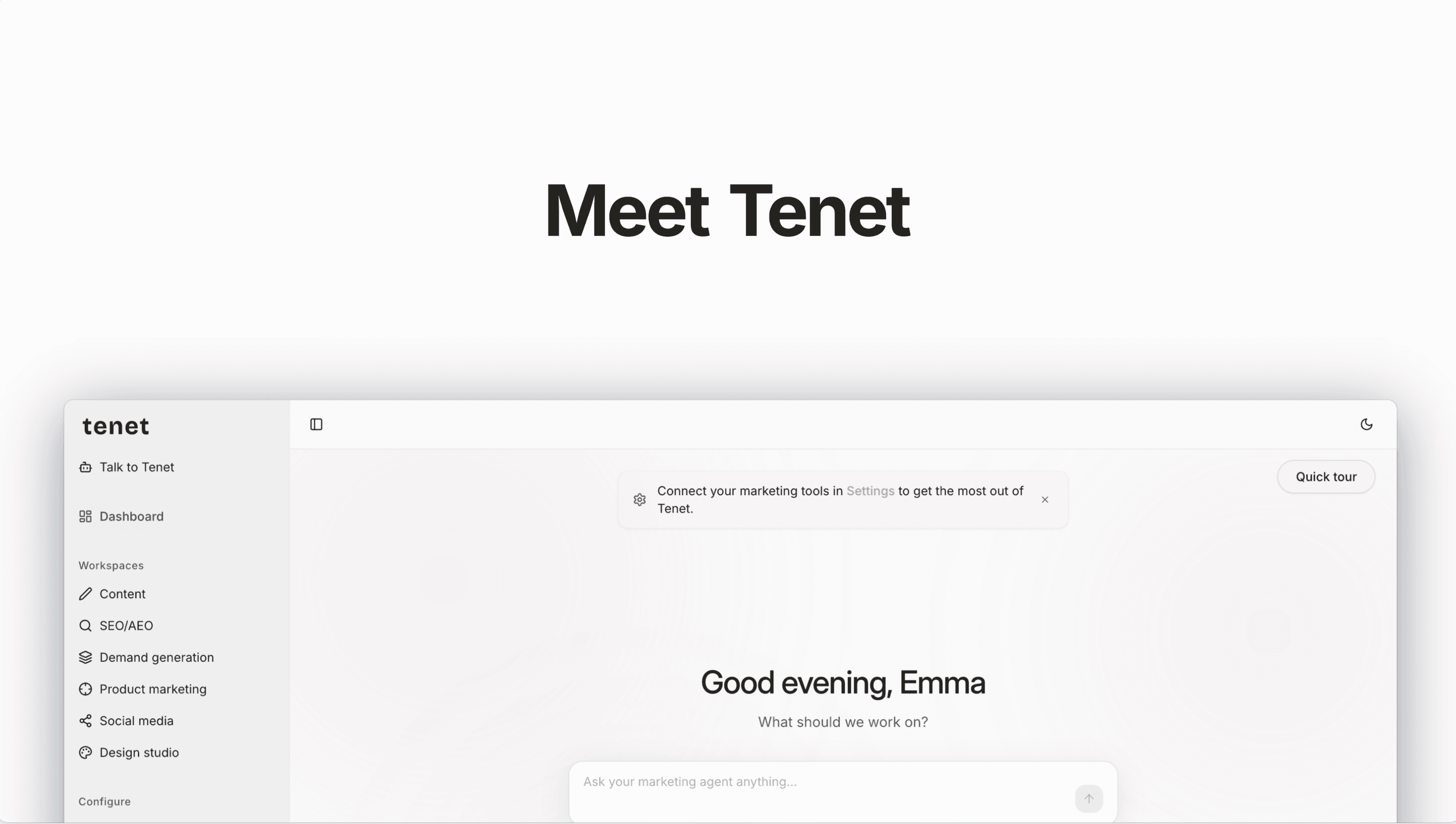
April 2026: The biggest Tenet update yet
Your marketing stack just got a major upgrade.

Customer loyalty: The complete guide to building lasting relationships
Discover proven strategies to build customer loyalty, from loyalty programs to emotional connections. Includes metrics, examples, and actionable frameworks.

Customer retention: You don’t need more customers. You need to keep them
Comprehensive guide to customer retention strategies, metrics, and best practices. Learn proven methods to reduce churn and boost customer loyalty in 2026.