Turning word-of-mouth into a scalable growth engine

Think about your last major purchase—a laptop, vacation, or special dinner.
You likely didn’t buy based on an advertisement alone. Instead, you probably consulted someone you trust: a tech-savvy colleague, a well-traveled friend, or someone whose judgment you respect.
That conversation represents what marketers have pursued for decades: authentic influence that money cannot buy.
While companies spend billions on advertising, only 92% of consumers trust recommendations from people they know over all other forms of advertising. This isn’t merely preference—it’s economics in action.
Landmark study shows word of mouth drives 13% of consumer sales yet most businesses treat it as coincidence rather than the systematic growth engine it could become.
What is word-of-mouth: Definition and core principles
Word-of-mouth refers to informal communication between people about products, services, brands, or experiences. It encompasses natural conversations where someone shares opinions, recommendations, or stories about businesses with friends, family, colleagues, or acquaintances.
Unlike traditional advertising, word-of-mouth represents peer-to-peer communication that carries inherent trust because it stems from personal experience rather than corporate messaging. When your neighbor describes their exceptional restaurant experience, or a colleague recommends their financial advisor, that’s word-of-mouth in its purest form.
The core principles underlying effective word-of-mouth remain consistent across all channels: authenticity, relevance, and emotional connection. Authentic recommendations emerge from genuine experiences, not manufactured enthusiasm. Relevant word-of-mouth addresses specific needs or pain points that resonate with the recipient. Emotional connection transforms a simple product mention into a compelling story that motivates action.
The power lies in authenticity. People share recommendations because they genuinely want to help others, warn about poor experiences, or express enthusiasm about discoveries. This motivation creates credibility that paid advertisements cannot match.
Historical context
The phrase “word-of-mouth” dates back centuries, originating from the literal act of speaking words from one person to another. Before mass media, word-of-mouth served as the primary method for sharing news, recommendations, and warnings within communities.
In business contexts, the term gained prominence during the mid-20th century as marketers recognized that personal recommendations often outperformed advertising efforts. Today’s digital age has expanded the definition beyond literal speech to include written reviews, social media posts, and online discussions, but the core principle remains unchanged: people trust other people more than brands.
Word-of-Mouth vs. Other communication forms
Word-of-mouth differs fundamentally from other communication methods. Traditional advertising represents one-way, controlled messaging from brands to consumers. Public relations involves managed communication through media channels, while direct marketing targets specific audiences with personalized but still corporate messages.
Word-of-mouth, however, is multi-directional, uncontrolled, and peer-generated. It cannot be purchased directly, though it can be influenced. It spreads organically through existing relationships and trust networks, making it both more credible and more unpredictable than managed marketing communications.
The psychology behind personal recommendations
Core motivations
People share recommendations for deeply psychological reasons beyond simple altruism. Research identifies two primary drivers: social currency and triggers.
Social currency refers to how sharing information makes people feel special or knowledgeable. When someone discovers something before others, sharing that information provides a sense of status. They become the person “in the know,” which satisfies a fundamental human need for recognition and expertise.
Triggers work as environmental cues that remind people of brands or experiences, prompting natural conversation. A distinctive detail, a memorable interaction, or a repeated situation can all increase the likelihood of word-of-mouth mentions.
Emotional drivers
Strong emotional experiences, whether positive or negative, drive people to share. Remarkable customer service, surprising product features, or frustrating experiences create emotional intensity that people feel compelled to talk about.
The emotional component cannot be understated. The more emotionally charged the experience, the more likely it is to be shared and to influence others.
When consumers rely on word-of-mouth
High-stakes decisions
Consumers turn to word-of-mouth recommendations most frequently during high-stakes or unfamiliar purchasing decisions. The pattern is clear: the more money, time, or personal risk involved, the more people seek trusted opinions before deciding.
Professional services
Professional services see particularly heavy word-of-mouth influence because quality is difficult to assess beforehand. Legal services, healthcare, contractors, and consultants all depend heavily on referrals because their expertise and trustworthiness cannot be easily evaluated through traditional marketing materials.
Timing and urgency
Word-of-mouth also affects timing. Recommendations often lead to quicker decisions, creating both immediate consideration and urgency.
Digital vs. Traditional word-of-mouth
Traditional word-of-mouth happens in person through conversations, phone calls, and personal interactions. This form maintains the highest trust levels because people know exactly who is making the recommendation.
Digital word-of-mouth includes online reviews, social media posts, forums, and messaging apps. While it lacks some personal context, it offers scale and reach that traditional conversations cannot match.
The most effective strategies combine both forms. A single experience can move from a conversation to a post to a review, with each reinforcing the other.
Word-of-Mouth marketing: Strategic business applications
Definition and scope
Word-of-mouth marketing represents the strategic effort to encourage and amplify natural customer conversations. It is not about forcing people to talk, but about creating experiences worth sharing and making sharing easier.
Business implementation
Customers talk about brands regularly, but most of these conversations happen without direct business involvement. The goal is to influence these conversations positively while creating systems that encourage more of them.
This can include simple actions like asking for reviews or more structured approaches like building referral systems and customer advocacy programs. The key is intentionality.
The economic impact and competitive advantage
Measurable benefits
Word-of-mouth delivers measurable results. It drives more sales than many traditional channels, improves customer retention, and increases customer lifetime value.
Strategic advantage
Businesses that build strong word-of-mouth systems benefit from trust, lower acquisition costs, and long-term growth. These advantages are difficult for competitors to replicate because they are rooted in real customer experiences.
Strategic implementation
Successful companies treat word-of-mouth as a system. They focus on delivering consistent value, encouraging sharing, and continuously improving the customer experience.
ROI of word-of-mouth marketing
Calculating return on investment for word-of-mouth marketing requires careful consideration of both direct and indirect costs and benefits. Direct costs include referral program rewards, word-of-mouth campaign expenses, and staff time dedicated to customer advocacy programs.
The benefits extend far beyond immediate customer acquisition. Word-of-mouth generates 5x more sales than paid advertising while creating customers who typically have higher lifetime value, better retention rates, and greater likelihood to become advocates themselves.
Indirect benefits include reduced customer acquisition costs, shortened sales cycles, and improved brand reputation. When customers arrive through trusted recommendations, they require less convincing and education, which reduces sales and marketing expenses per acquisition.
The compounding nature of word-of-mouth creates exponential ROI potential over time. Each satisfied customer can generate multiple referrals throughout their relationship with the business, creating ongoing returns from initial investments in customer experience and advocacy programs.
Long-term brand value represents another significant but often unmeasured benefit. Businesses with strong word-of-mouth reputations enjoy competitive advantages that extend beyond individual transactions, including easier talent recruitment, partnership opportunities, and product positioning that supports premium pricing.
Amplify your word-of-mouth strategy with Tenet
Word-of-mouth marketing drives 20-50% of all purchasing decisions, yet most small marketing teams struggle to create the testimonials, case studies, and success stories that fuel organic growth. You're stuck choosing between expensive agencies or juggling multiple tools—ChatGPT for writing, Canva for design, separate platforms for SEO optimization. The result? Fragmented content that takes weeks to produce and rarely matches your brand voice.
How AI can help create word-of-mouth content
The best word-of-mouth content tells real stories about real results. AI excels at analyzing customer data, feedback, and outcomes to craft compelling narratives. You can transform raw testimonials into polished case studies, turn data points into success stories, and create social-ready content that customers want to share—all without spending hours interviewing customers and writing from scratch.
The resistance is fading fast. Just 11% of marketers avoid AI for content generation, down from 13% last year. Teams that embrace AI-powered content creation scale faster and produce more consistent results.
Tenet's approach to generating testimonials, case studies, and success stories
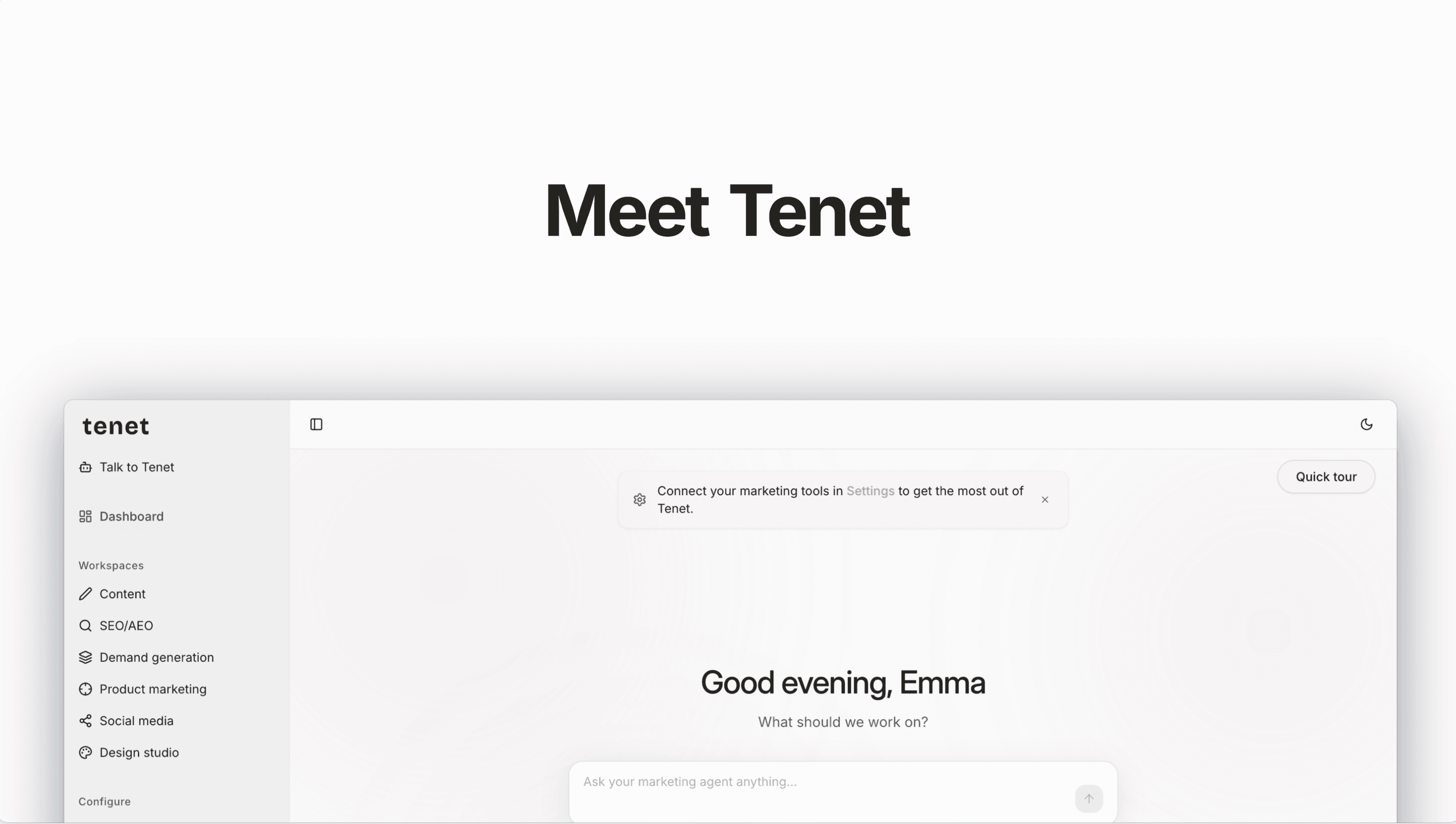
Tenet learns your brand voice from existing content and generates on-brand word-of-mouth assets in minutes. Upload your customer data, select the content type you need, and the AI creates everything from detailed case studies to bite-sized testimonials—all matching your tone and messaging.
Tenet handles the full workflow: research, writing, optimization, and formatting. You go from raw customer feedback to publish-ready success stories without hiring consultants or learning complex software.
The platform's AI catches clichés, verifies claims, and scores content on relevance and originality—ensuring your content drives results instead of sounding like everyone else's.
Frequently asked questions
What is the meaning of words of mouth?
"Word-of-mouth" refers to informal communication between people about products, services, or experiences, typically in the form of personal recommendations or shared opinions. The phrase describes information passed from person to person through conversation rather than formal advertising or media.
The term emphasizes the personal, conversational nature of this communication—literally words spoken from one person's mouth to another's ears. In modern usage, word-of-mouth extends beyond spoken conversation to include written reviews, social media posts, and other forms of peer-to-peer communication about brands and experiences.
Word-of-mouth carries particular power because it comes from trusted sources without commercial motivation. When friends, family members, or colleagues share their experiences, recipients typically view these communications as more credible and relevant than marketing messages from businesses themselves.
What does it mean to go by word-of-mouth?
"Going by word-of-mouth" means relying on personal recommendations and informal communication rather than formal advertising, research, or official sources when making decisions. People who choose services or products based on word-of-mouth prioritize personal recommendations over other forms of information.
This approach reflects trust in personal networks and skepticism about commercial messaging. Many consumers prefer word-of-mouth guidance because it comes from people with similar needs and circumstances who have direct experience with the product or service.
Businesses that grow "by word-of-mouth" depend primarily on customer recommendations rather than paid advertising for new customer acquisition. This growth strategy can be highly effective but requires exceptional customer experience to generate consistent positive recommendations.
What is another word for word-of-mouth?
Several terms capture similar concepts to word-of-mouth, each with slightly different connotations. "Buzz" suggests active, exciting conversation around a topic. "Grapevine" refers to informal information networks. "Viral" describes rapid spread through social networks, particularly online.
"Personal recommendations" or "peer recommendations" emphasize the relationship aspect of word-of-mouth communication. "Social proof" describes the psychological phenomenon that makes word-of-mouth influential. "Organic marketing" suggests the natural, unforced nature of authentic word-of-mouth.
"Customer advocacy" encompasses the broader practice of customers actively promoting a brand. "User-generated content" captures digital expressions of word-of-mouth through reviews, social media posts, and shared experiences online.
What is the idiom of word-of-mouth?
Word-of-mouth functions as an idiom meaning information or recommendations shared through informal, personal communication rather than official or commercial channels. The phrase uses the physical act of speaking ("mouth") to represent the entire concept of peer-to-peer information sharing.
Common idiomatic expressions include "heard it through the grapevine," "spread like wildfire," and "good things spread fast." These phrases all capture the organic, person-to-person nature of word-of-mouth communication and its potential for rapid distribution through social networks.
The idiom emphasizes authenticity and trust—information received through word-of-mouth carries the implied endorsement of the person sharing it, making it more credible than information from commercial or unknown sources.
How effective is word-of-mouth marketing compared to traditional advertising?
Word-of-mouth marketing significantly outperforms traditional advertising across multiple metrics. Research shows that 92% of consumers trust recommendations from friends and family, while only 25% trust traditional advertisements. This trust advantage translates into higher conversion rates and shorter sales cycles.
Economically, word-of-mouth generates approximately 5x more sales than paid advertising while providing customers with 16% higher lifetime value. The cost efficiency comes from the organic nature of word-of-mouth spread—each satisfied customer can generate multiple referrals without additional advertising spend.
However, word-of-mouth marketing faces challenges that traditional advertising doesn't. It's harder to control, slower to scale initially, and limited by existing customer networks. The most successful businesses combine both approaches, using traditional advertising to build awareness while creating exceptional experiences that generate word-of-mouth advocacy.
Why do people share word-of-mouth recommendations?
People share recommendations for several psychological and social reasons. Social currency drives much sharing behavior—people feel good about being helpful, knowledgeable, or "in the know" when they share discoveries with others. Making good recommendations enhances their reputation and social status within their networks.
Emotional experiences, both positive and negative, create natural motivation to share. When someone has an exceptional restaurant meal or frustrating customer service experience, they feel compelled to tell others. Yet surprisingly, 56% of consumers indicate to have shared a good experience with others.and seek opinions from their networks.
Reciprocity also plays a role—people who have received helpful recommendations from others feel motivated to share their own discoveries. This creates ongoing cycles of recommendation sharing within social groups and professional networks.
Can small businesses compete using word-of-mouth marketing?
Small businesses often have significant advantages in word-of-mouth marketing because they can create more personal, memorable customer experiences than larger competitors. Personal relationships between business owners and customers create natural foundations for authentic recommendations and referrals.
The key advantages for small businesses include closer customer relationships, ability to respond quickly to feedback, and flexibility to create unique experiences that generate stories worth sharing. Local businesses particularly benefit from word-of-mouth because community networks are tighter and recommendations carry more weight.
However, small businesses must be systematic about word-of-mouth rather than hoping it happens naturally. This means actively asking for reviews, creating referral systems, following up with customers, and consistently delivering experiences that exceed expectations. Overall, 63% of small businesses that have gained new customers say word of mouth is key to their success.
What are the biggest mistakes businesses make with word-of-mouth marketing?
The most common mistake is treating word-of-mouth passively—hoping good service will automatically generate referrals without systematic efforts to encourage, facilitate, and track recommendations. Many businesses provide good experiences but fail to ask customers to share those experiences or make sharing easy and rewarding.
Another significant error is failing to prioritize referred customers. When businesses don't treat referrals specially or acknowledge the effort customers made in recommending them, they miss opportunities to create advocates from both the referrer and the new customer.
Many businesses also lack systematic approaches to word-of-mouth. They depend on a few vocal customers rather than building comprehensive referral programs, review systems, and customer advocacy initiatives. Without structured efforts, word-of-mouth remains limited and unpredictable rather than becoming a reliable growth engine.
See other articles

Customer advocacy in 2026: Turn happy customers into your best marketing team
Master customer advocacy with our complete guide. Learn proven strategies, frameworks, ROI metrics, and real examples to turn customers into powerful brand champions.
April 2026: The biggest Tenet update yet
Your marketing stack just got a major upgrade.

Customer loyalty: The complete guide to building lasting relationships
Discover proven strategies to build customer loyalty, from loyalty programs to emotional connections. Includes metrics, examples, and actionable frameworks.