From awareness to revenue: A smarter demand generation strategy

From awareness to revenue: A smarter demand generation strategy
Picture a chess grandmaster and a novice playing the same game. They see the same board, the same pieces, the same rules. But the grandmaster thinks five moves ahead while the novice focuses only on the immediate capture.
B2B marketing works the same way. Most companies play checkers—chasing immediate conversions, measuring form fills, celebrating quick wins. But are the companies winning long-term? They're playing chess. They understand that before someone becomes a customer, they need to become aware they have a problem. Before they'll consider your solution, they need to trust your expertise.
Demand generation delivers higher-quality leads than traditional methods, improving win rates and reducing sales waste. But here's what makes it challenging: demand generation requires thinking like that chess grandmaster, optimizing for moves your competitor won't see for months.
Demand generation definition and core concepts
What demand generation actually means
Demand generation is the strategic process of creating awareness, interest, and buying intent among potential customers before they enter your sales funnel. Unlike lead generation, which focuses on capturing existing demand through forms and contact information, demand generation builds the market conditions that make people want to buy in the first place.
April Dunford, CEO of Ambient Strategy, defines it precisely:
"Demand Generation describes activities and programs where the measurable outcome is prospects entering into a sales process."
This isn't about collecting email addresses—it's about creating a pipeline of genuinely interested, educated prospects who understand their problem and see you as the solution.
The distinction matters because B2B buying has fundamentally shifted. Modern buyers complete 67% of their purchase journey before contacting vendors. They're researching competitors, reading reviews, downloading resources, and building internal consensus independently. The companies that influence this invisible research phase control the narrative when buyers finally surface.
The 3 pillars of effective demand generation
Successful demand generation rests on three foundational elements:
Problem Education: Most prospects don't fully understand their problem or its business impact. Effective demand generation helps them diagnose issues, quantify costs, and recognize the urgency of solving them.
Solution Awareness: Once prospects understand their problem, they need to know solutions exist. This isn't product promotion—it's category education. You're teaching them about approaches, methodologies, and frameworks they can use to solve their challenges.
Vendor Trust: Finally, prospects need to believe you're capable of delivering results. This happens through case studies, thought leadership, social proof, and demonstrating deep understanding of their specific situation.
These pillars work sequentially. Skip problem education and you're selling to people who don't see the value. Skip solution awareness and prospects might solve the problem incorrectly. Skip vendor trust and they'll choose your competitor.
Essential demand generation strategies and tactics
Content marketing that actually drives demand
Content marketing helped 76% of B2B marketers generate demand/leads in, which was up from 67% in the previous year . The most effective approach is the "problem-first" content strategy. Start with content that helps prospects identify and quantify problems they might not fully recognize. For example, if you sell cybersecurity software, don't begin with product features. Instead, publish research about the hidden costs of security incidents or frameworks for calculating security ROI.
Educational blogs drive 52% more organic traffic than promotional content. The reason: Google's algorithm and human psychology both favor genuinely helpful content over sales pitches. When prospects find your analysis through organic search, you've already established credibility and trust.
Stage your content progression carefully. Early-stage content should focus on problem identification and market education. Middle-stage content can introduce solution categories and methodologies. Only late-stage content should feature your specific product capabilities and comparisons.
Social media and community building for B2B
LinkedIn generates 80% of B2B leads, but the platform rewards engagement over promotion. The companies winning on LinkedIn aren't pushing products—they're sharing insights, asking questions, and contributing to industry conversations.
GoPro provides a masterclass in community-driven demand generation. They build demand by sharing user-generated content, engaging on social media, and partnering with influencers. This creates organic demand and loyalty among adventure enthusiasts without directly selling cameras.
The key is understanding that social media demand generation works through influence, not interruption. Your goal is becoming a trusted voice in industry conversations. Share data from your customer research. Comment thoughtfully on industry trends. Ask questions that spark discussions about the problems you solve.
This approach requires patience. You're building relationships and reputation rather than driving immediate conversions. But the payoff is substantial: when prospects eventually need your solution, you're already top-of-mind as a trusted advisor.
Webinars and thought leadership that convert
Webinars are the top-of-funnel tactic for 45% of marketers and produce high-quality leads for 53%. But most companies approach webinars wrong—they use them as product demos rather than demand generation tools.
Effective demand generation webinars focus on industry insights, trend analysis, and actionable frameworks rather than product features. Shopify demonstrates this with their always-on webinars featuring a resetting 15-minute countdown timer, converting anonymous readers into leads by creating urgency around evergreen e-commerce topics.
The most effective webinar formula follows this structure:
Problem amplification: Help attendees understand why their current approach isn't working
Framework introduction: Teach a methodology or framework for solving the problem
Success examples: Share case studies of companies that implemented the framework successfully
Next steps: Offer additional resources or consultation rather than product demos
This approach positions your company as the expert while educating prospects about better approaches to their challenges. The webinar itself becomes a proof point for your expertise and methodology.
SEO and Organic Discovery Strategies
The key is understanding search intent behind demand generation keywords. People searching for "marketing automation" are probably comparing solutions (lead generation opportunity). But people searching for "marketing campaign ROI measurement" are trying to solve a problem (demand generation opportunity).
Focus your SEO strategy on problem-oriented and educational keywords rather than product-focused terms. Create comprehensive guides, research reports, and how-to content that helps prospects understand and solve their challenges. These pages often rank better and generate more qualified traffic than product pages.
Long-form, research-backed content performs particularly well. Search engines favor comprehensive resources that fully address user questions. This aligns perfectly with demand generation goals: you want to be the definitive resource for prospects researching their challenges.
Demand generation examples: Real-world applications
B2B SaaS Success Stories
Dropbox created one of the most famous demand generation success stories with their simple referral program. By offering free storage space for referring friends, they increased signups by 60% and added millions of users without traditional advertising spend. The genius was creating viral demand through existing user satisfaction rather than external marketing.
HubSpot built their entire business on demand generation principles. Their free blogs, ebooks, webinars, and certification courses on inbound marketing positioned them as thought leaders while capturing leads and building trust. They weren't just selling marketing software—they were teaching a methodology that required their type of software to implement successfully.
Zoom demonstrates how demand generation works across B2B and B2C simultaneously. They combine free trials, industry partnerships, event sponsorships, and educational content to increase visibility and drive adoption. The free trial removes friction while educational content helps prospects understand video conferencing benefits they might not have considered.
Content-Driven Campaign Examples
Airbnb's approach shows how referral programs can drive demand generation. They offer travel credits for user referrals, which fuels rapid growth, higher bookings, and creates a community of advocates. Each successful referral creates two satisfied customers who generate more referrals.
Dollar Shave Club's viral video campaign exemplifies content-driven demand generation. Their humorous social media videos built a fun brand identity that sparked conversations and drove interest in subscription razors. They created demand for a new category—subscription personal care—rather than just competing on razor features.
Event-Based Demand Generation
IFTTT shows how creative event marketing can drive demand generation. They distributed custom neon argyle socks as event swag, turning attendees into walking advertisements while fostering developer loyalty through memorable, useful items. The unusual nature of the swag created conversations and social media posts that extended the event's impact.
Solar Screen demonstrates demand generation through gamification. They hosted a Facebook quiz contest offering technical training prizes to partners and retailers. This engaged their audience while generating leads through interactive content that educated participants about their products.
These examples share common elements: they create value before asking for anything in return, they generate conversations and social sharing, and they position the company as innovative or thoughtful rather than just promotional.
Digital marketing channels for demand generation
Google Ads for Awareness and Education
Most companies use Google Ads for lead generation—targeting high-intent keywords like "CRM software pricing" or "marketing automation demo." But paid advertising drives demand for 53% of organizations when used strategically for demand generation.
The key is targeting educational and problem-oriented keywords rather than solution searches. Target phrases like "marketing campaign ROI measurement," "sales team productivity challenges," or "customer churn analysis." These searchers have problems but haven't yet committed to specific solution categories.
Create ad copy that promises insights rather than product information. Instead of "See CRM Demo," try "Download: Sales Team Productivity Benchmark Report." Lead to educational landing pages with valuable content that captures contact information in exchange for insights rather than product pitches.
This approach costs more per conversion but generates higher-quality prospects who are earlier in their buying journey. You're influencing how they think about their problems and evaluate solutions rather than just competing on features and pricing.
LinkedIn and Social Media Advertising
LinkedIn advertising excels at demand generation because you can target based on job function, seniority, and industry rather than just search intent. This allows you to reach prospects who have the problems you solve but aren't actively searching for solutions.
The most effective LinkedIn demand generation campaigns focus on industry insights, research reports, and educational content rather than product promotions. Target senior executives with research about industry trends and challenges. Target functional leaders with best practices and benchmarking data.
Use LinkedIn's conversation ads and message ads to start dialogues rather than drive immediate conversions. Ask about challenges, offer relevant resources, and build relationships over time. This approach generates fewer immediate leads but creates more qualified pipeline because you're engaging prospects during their research phase.
Video content performs particularly well for demand generation on social platforms. Short educational videos, industry trend analysis, and behind-the-scenes content generate engagement and shares that extend your reach beyond paid audiences.
Email Marketing and Marketing Automation
Demand generation email sequences focus on education and insight sharing rather than product promotion. Share industry research, invite subscribers to webinars, offer frameworks and tools, and provide market analysis. The goal is becoming a trusted information source rather than driving immediate sales conversations.
Segment your email lists based on engagement behavior rather than just demographics. Identify subscribers who consistently engage with educational content and provide them with more advanced insights and exclusive research. These engaged subscribers are more likely to remember you when they're ready to buy.
Use behavioral triggers based on content consumption rather than just time delays. If someone downloads multiple pieces about a specific topic, follow up with additional resources and invitation to relevant webinars or consultations. This approach feels helpful rather than pushy because it responds to demonstrated interest.
Influencer and Partnership Marketing
B2B influencer marketing works differently than consumer influencer campaigns. Instead of massive reach, you need credibility within specific professional communities. Partner with industry analysts, consultants, and practitioners who already have trust with your target audience.
The most effective B2B influencer partnerships focus on co-created content rather than simple endorsements. Work with influencers to develop research reports, industry analyses, or educational webinar series. This provides them with valuable content for their audience while positioning your company as a knowledgeable partner.
Industry partnerships can multiply your demand generation reach. Partner with complementary software vendors, consulting firms, or industry associations to co-market educational content and events. These partnerships provide access to relevant audiences while sharing content creation costs and effort.
The role of a demand generation professional
Key Responsibilities and Daily Tasks
A demand generation professional operates at the intersection of marketing strategy, content creation, and data analysis. Unlike traditional marketers who might focus on single channels or tactics, demand gen professionals orchestrate multi-channel campaigns designed to influence long-term buying behavior.
Daily responsibilities typically include analyzing engagement metrics across content platforms, collaborating with content teams on educational resources, reviewing and optimizing nurture campaigns, and working with sales teams to understand which marketing touches are influencing pipeline creation. They're constantly testing messaging, measuring content performance, and adjusting strategies based on buyer behavior data.
David Hoos, Director of Marketing at The Good, describes it as: "Demand generation is aligning sales and marketing to the point that marketing can use a variety of tactics to fill the sales pipeline with high-quality leads." This alignment responsibility often consumes significant time—facilitating regular sales-marketing meetings, creating shared reporting dashboards, and ensuring both teams understand the demand generation process.
The role also requires significant project management skills. Demand generation campaigns often span multiple quarters and involve numerous stakeholders across content, design, sales, and sometimes customer success teams. Successful demand gen professionals excel at coordinating these complex, long-term initiatives while maintaining focus on measurable business outcomes.
Skills and Qualifications Required
Technical skills are increasingly important in demand generation roles. Professionals need proficiency with marketing automation platforms, CRM systems, analytics tools, and increasingly AI-powered personalization and content creation tools. 42% of B2B leaders now prioritize content personalization at scale, requiring comfort with technology that enables customization.
Analytical thinking is perhaps the most critical skill. Demand generation professionals must connect marketing activities to business outcomes across long time horizons, often with complex attribution challenges. They need to understand statistical significance, cohort analysis, and multi-touch attribution modeling to prove program effectiveness.
Content strategy expertise is essential because content marketing drives demand for 76% of B2B marketers. This doesn't mean writing every piece of content, but rather understanding what content works at each stage of the buyer's journey and how to optimize content for both search engines and human psychology.
Communication skills matter tremendously because demand generation professionals must influence stakeholders across the organization. They need to explain complex attribution models to executives, collaborate with sales teams who may prefer simpler lead generation approaches, and work with content creators who might not understand marketing metrics.
How Demand Gen Teams Collaborate with Sales and Marketing
The most successful demand generation programs break down traditional silos between marketing and sales. Amanda Nielsen of New Breed describes demand generation as: "A strategy that encompasses every component of the customer lifecycle; all the way from anonymous visitor to delighted customer."
This holistic view requires new collaboration models. Instead of marketing generating leads and "throwing them over the wall" to sales, demand generation teams work with sales to define ideal customer profiles, create shared scoring models, and develop integrated nurture programs that combine marketing content with sales outreach.
Regular feedback loops are essential. Sales teams provide insights about which marketing touches actually influence buying decisions, while marketing teams help sales understand how to use educational content in their outreach. The best teams hold weekly pipeline reviews that examine not just immediate opportunities but also the quality of demand being generated.
Technology integration enables this collaboration. Shared dashboards showing lead quality, progression metrics, and revenue attribution help both teams understand program effectiveness. CRM integration with marketing automation platforms allows sales teams to see the complete engagement history before making outreach calls.
Building your demand generation engine
Setting up your demand gen tech stack
The foundation of effective demand generation is a technology stack that enables personalization, attribution, and optimization across multiple channels. The core components include a marketing automation platform, CRM system, analytics tools, and content management system that integrate to provide complete visibility into buyer engagement.
Marketing automation platforms like HubSpot, Marketo, or Pardot enable the nurture campaigns and lead scoring that make demand generation scalable. But the key is configuration rather than just implementation. Set up behavioral triggers based on content engagement, create scoring models that weight educational content consumption, and build nurture tracks that provide value rather than just promoting products.
Analytics and attribution tools become critical because demand generation impact often happens across long time horizons and multiple touchpoints. Google Analytics, combined with specialized B2B attribution platforms, helps you understand which content and channels are actually influencing pipeline creation rather than just immediate conversions.
Content management and optimization tools enable the content creation and distribution that drives demand generation success. This includes SEO tools for optimizing educational content, social media management platforms for sharing insights, and increasingly AI-powered tools for personalizing content at scale.
Creating buyer personas and journey mapping
Effective demand generation requires understanding not just who your buyers are, but how they research and make decisions. Traditional buyer personas focus on demographics and firmographics, but demand generation personas need to include information consumption habits, decision-making processes, and problem awareness levels.
Start by interviewing recent customers about their buying journey. Ask specifically about what content they consumed, which sources they trusted, how they convinced internal stakeholders, and what concerns they had at each stage. This research reveals the actual path prospects take rather than the idealized marketing funnel you might assume.
Map content and engagement opportunities to each stage of this journey. Early-stage prospects need problem identification and market education content. Middle-stage prospects need solution evaluation frameworks and vendor comparison criteria. Late-stage prospects need implementation guides and ROI calculators.
The key insight is that prospects often cycle through these stages multiple times and may enter at any point. Your demand generation engine needs to serve prospects regardless of where they start and help them progress at their own pace rather than forcing them through a linear sequence.
Developing content strategy that drives demand
Content strategy for demand generation differs fundamentally from content marketing or thought leadership. Every piece of content should either help prospects identify problems, understand solution approaches, or trust your expertise. Content that doesn't serve one of these purposes dilutes your message and wastes resources.
Start with a content audit that maps your existing content to buyer journey stages and business outcomes. You'll likely find gaps in early-stage, problem-identification content and an over-emphasis on product-focused content. Most companies create too much content about their solutions and not enough about the problems their solutions solve.
Develop a content calendar that balances educational content with industry insights and company expertise. The 70-20-10 rule works well: 70% educational content about problems and solutions, 20% industry insights and trends, 10% company and product content. This ratio keeps you helpful while building awareness and trust.
Quality matters more than quantity in demand generation content. A single comprehensive guide that becomes the definitive resource for a specific problem can generate more demand than dozens of blog posts. Focus on creating content that prospects will bookmark, share, and reference during their decision-making process.
Future of demand generation: Trends and predictions
AI and Automation in demand generation
Artificial intelligence is fundamentally changing how demand generation operates, with 42% of B2B leaders focusing on content personalization at scale. AI tools now enable personalized content creation, behavioral prediction, and optimization that was impossible with manual processes.
The most immediate AI impact is in content creation and optimization. AI can analyze successful content across your industry, identify topic gaps, and suggest content approaches that resonate with specific audience segments. This doesn't replace human expertise but amplifies it by providing data-driven insights about content strategy.
Predictive analytics powered by AI help identify prospects who are most likely to engage with demand generation content and eventually convert. By analyzing patterns in past successful conversions, AI can score prospects based on engagement behavior, content consumption patterns, and demographic characteristics.
However, automation without context continues to backfire. Modern B2B buyers recognize poorly contextualized automation and ignore generic messaging. The key is using AI to enable better personalization rather than just scaling generic content. Successful AI implementation combines data-driven insights with human understanding of buyer psychology and industry dynamics.
Privacy-first marketing strategies
Increasing privacy regulations and consumer privacy awareness are forcing demand generation professionals to rethink data collection and usage strategies. The era of extensive behavioral tracking and third-party data purchasing is ending, requiring new approaches to understanding and engaging prospects.
Zero-party data—information prospects voluntarily provide—becomes increasingly valuable. Interactive content like assessments, calculators, and quizzes can gather useful information about prospects' challenges and priorities while providing immediate value. This approach builds trust while generating the insights needed for effective personalization.
Community-building and owned media strategies become more important as external tracking becomes limited. Companies that build email lists, social media followings, and online communities have direct relationships with prospects that don't depend on third-party platforms or tracking technologies.
Transparency and value exchange principles guide successful privacy-first demand generation. Prospects are willing to share information when they understand how it will be used and what value they'll receive in return. Clear privacy policies, obvious value propositions, and respect for data preferences build trust that enables effective demand generation even within privacy constraints.
Account-based marketing integration
The lines between demand generation and account-based marketing (ABM) continue to blur as organizations realize both approaches work better when integrated. Traditional demand generation casts wide nets to build awareness, while ABM provides targeted, personalized approaches for high-value accounts.
Integrated approaches combine the reach of demand generation with the precision of ABM. Broad educational content builds awareness across your total addressable market, while personalized content and outreach targets specific high-value accounts with customized messaging about their specific challenges and opportunities.
Technology platforms increasingly support this integration by enabling account-based personalization of demand generation content. Website personalization, targeted advertising, and customized email sequences can deliver different experiences to prospects from target accounts while maintaining consistent messaging and branding.
The future likely involves dynamic segmentation that automatically applies appropriate levels of personalization based on account size, fit, and engagement level. Small accounts receive standardized demand generation experiences, while large target accounts receive ABM-level personalization throughout their engagement with your content and campaigns.
Ready to transform your marketing with strategic demand generation?
Marketing doesn't have to be complicated. While other companies juggle dozens of tools, switching between content creation platforms, SEO research tools, social media schedulers, and demand gen software, you could be running your entire marketing function from one simple AI platform.
The challenge isn't strategy—it's execution. Small marketing teams need to produce high-quality content, optimize for search, manage social media, run demand gen campaigns, and maintain consistent brand voice across everything. That's impossible when you're tool-switching all day and drowning in complexity.
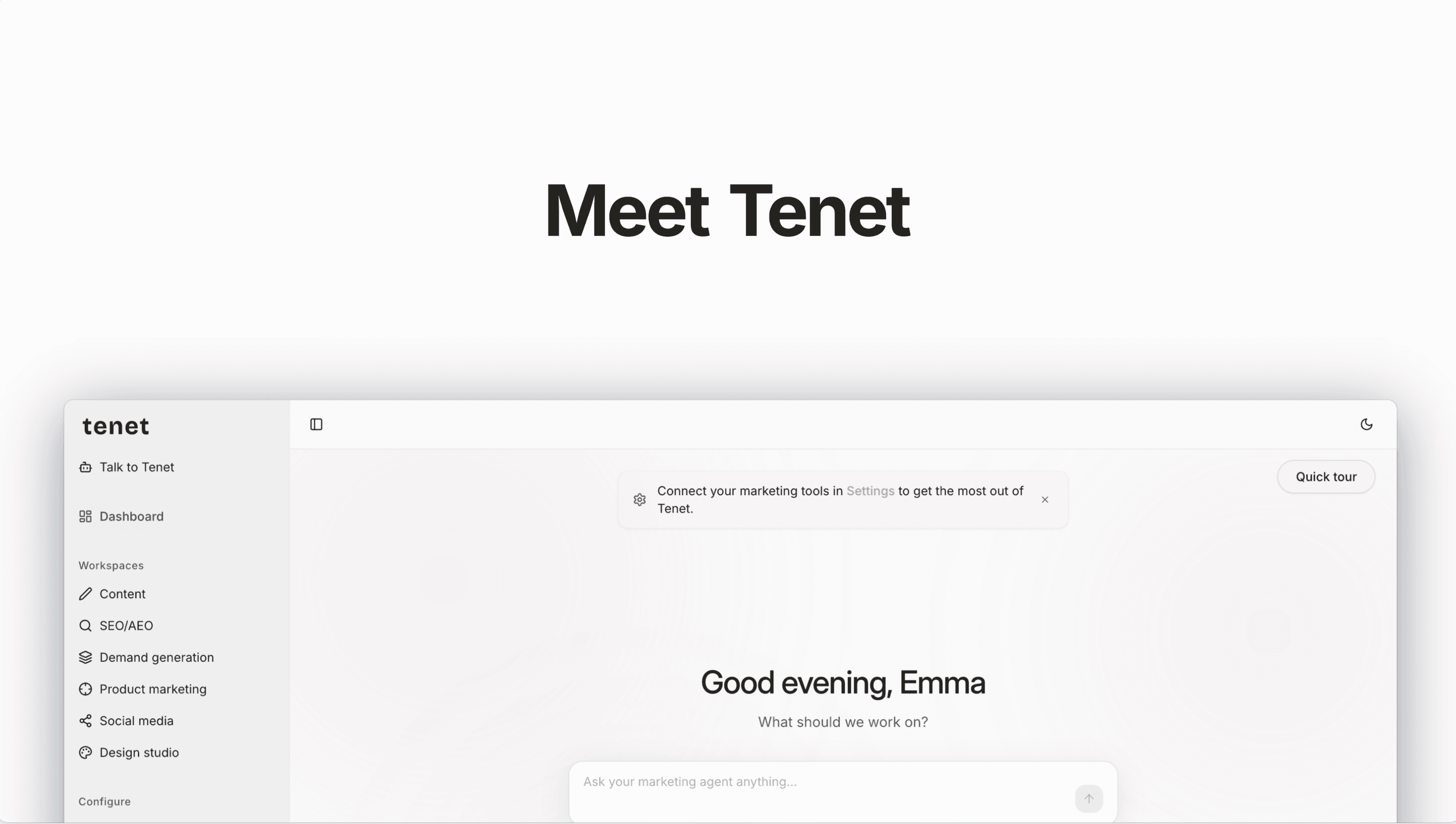
Tenet is the full-stack AI marketing platform that does it all. Upload your existing content, and our AI learns your brand voice in minutes. Then choose what you need: SEO-optimized blog posts, product marketing battle cards, social media campaigns, or demand gen strategies. Everything comes out on-brand and fact-checked, with cliché detection and quality scoring built in.
Frequently Asked Questions
What is meant by demand generation?
Demand generation is the strategic process of creating awareness, interest, and buying intent among potential customers before they enter your sales funnel. Unlike lead generation, which captures existing demand through forms and contact information, demand generation builds market conditions that make people want to buy. It focuses on educating prospects about problems they might not know they have, introducing solution categories, and building trust through thought leadership rather than immediate sales conversations.
What are examples of demand generation?
Effective demand generation examples include HubSpot's comprehensive educational content about inbound marketing, which teaches methodology while building demand for marketing automation software. Dropbox's referral program increased signups by 60% by creating viral demand through existing user satisfaction. Webinars that teach frameworks for solving business problems, SEO-optimized educational content that appears in organic searches, and social media thought leadership all exemplify demand generation because they build awareness and trust before prospects are ready to buy.
What does a demand generation person do?
A demand generation professional orchestrates multi-channel campaigns designed to influence long-term buying behavior. Daily responsibilities include analyzing engagement metrics across content platforms, collaborating with content teams on educational resources, optimizing nurture campaigns, and working with sales teams to understand which marketing activities influence pipeline creation. They operate at the intersection of marketing strategy, content creation, and data analysis, requiring skills in marketing automation, analytics, content strategy, and cross-functional collaboration.
What is lead generation vs demand generation?
Lead generation assumes demand already exists and focuses on capturing people actively searching for solutions—like Google Ads targeting "CRM software pricing." Demand generation creates demand by reaching people who have problems but don't know it or haven't prioritized solving them. Lead generation metrics focus on immediate conversions (cost per lead, conversion rates), while demand generation tracks longer-term metrics like brand awareness strategy, content engagement, and influenced revenue. Most successful B2B companies use both: demand generation to grow the overall market and shape buying criteria, lead generation to capture immediate opportunities.
How long does demand generation take to show results?
Demand generation typically requires 6-12 months to show meaningful business impact because it influences prospects during their research phase before they're ready to buy. Early indicators like content engagement, email subscription growth, and brand search volume appear within weeks, but pipeline and revenue impact develop over longer timeframes. The exact timeline depends on your industry's typical sales cycle length, content creation consistency, and market awareness levels. Companies with shorter sales cycles (3 months) might see results in 3-4 months, while those with longer cycles (12+ months) may need 9-12 months for full impact.
What's the difference between demand generation and content marketing?
Content marketing is a tactic that can support multiple objectives—brand awareness, thought leadership, SEO, customer retention. Demand generation is a strategic approach that uses content marketing along with other tactics (events, social media, paid advertising) to create buying intent. Demand generation content specifically aims to help prospects identify problems, understand solutions, and trust your expertise. While content marketing might include a wide range of topics related to your industry, demand generation content focuses specifically on the problems your products solve and the buying journey your prospects experience.
How do you measure demand generation ROI?
Measuring demand generation ROI requires tracking both immediate engagement metrics and long-term business outcomes. Leading indicators include website traffic to educational content, email engagement rates, content downloads, and brand search volume. Lagging indicators include influenced revenue (deals where demand generation content played a role), first-touch attribution on new opportunities, sales velocity improvements, and average deal size increases. Use multi-touch attribution to credit all touchpoints that influenced conversions, and implement cohort analysis to compare prospects who engaged with demand generation content to those who didn't. Many organizations track a blended metric combining immediate pipeline creation with long-term brand value.
See other articles

Turning word-of-mouth into a scalable growth engine
Word-of-mouth drives $6 trillion in global spending yearly, yet most businesses treat it as luck.

Customer advocacy in 2026: Turn happy customers into your best marketing team
Master customer advocacy with our complete guide. Learn proven strategies, frameworks, ROI metrics, and real examples to turn customers into powerful brand champions.
April 2026: The biggest Tenet update yet
Your marketing stack just got a major upgrade.