Why your marketing pipeline isn't converting
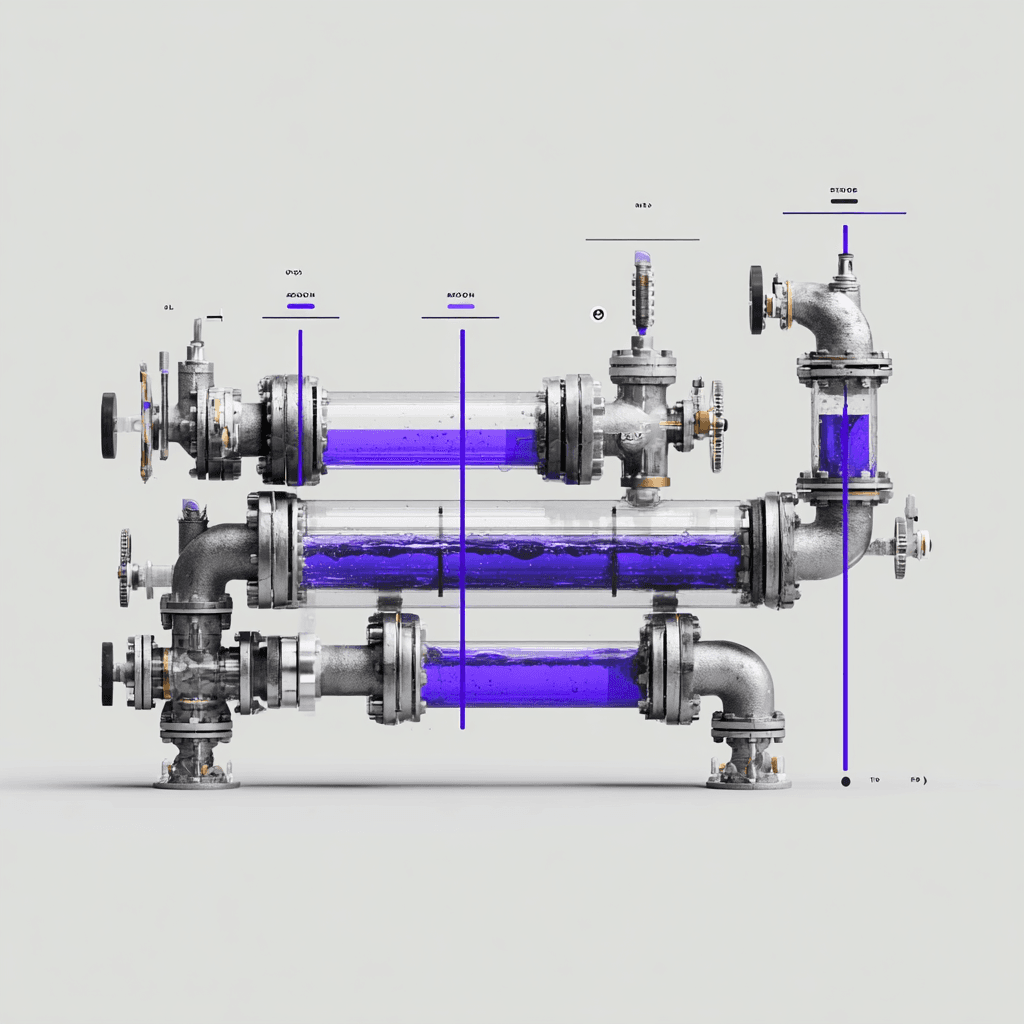
There's a phenomenon economists call the "funnel paradox." Pour water into a funnel, and you'd expect most of it to come out the other end. But in marketing, companies regularly accept that 90% of their leads will disappear somewhere in the middle. They treat this massive loss as inevitable rather than fixable.
The difference between companies that accept the paradox and those that solve it comes down to how they think about their marketing pipeline. Most organizations still manage marketing like it's 1995—generating leads and throwing them over the wall to sales. But the companies growing fastest today have reimagined their entire approach around pipeline thinking.
Organizations with accurate sales pipelines are 10% more likely to grow their revenue year over year, according to pipeline research. More dramatically, there's a significant revenue growth difference between companies that defined formal processes and those that didn't. The data is clear: your pipeline isn't just a tracking mechanism. It's your growth engine.
Yet most marketing teams still operate without true pipeline visibility. They optimize individual tactics—email open rates, social engagement, content downloads—while remaining blind to how these activities actually drive revenue. This guide changes that by showing you how to build, manage, and optimize a marketing pipeline that turns prospects into predictable revenue.
What is a marketing pipeline? Definition and core concepts
A marketing pipeline is a systematic process that tracks and nurtures prospects through every stage of their buying journey, from initial awareness to final purchase and beyond. Think of it as a revenue-focused framework that connects marketing activities directly to business outcomes rather than vanity metrics.
Pipeline marketing is a data-driven strategy that aligns sales and marketing teams to optimize the entire buyer journey from prospect to revenue, focusing on lead quality, progression, and shared KPIs over mere volume. As GDS Group explains,
(quote) "Pipeline marketing is a strategic approach that focuses on the entire funnel, rather than just the top (awareness) or the bottom (conversion). It aligns marketing and sales teams around a single revenue goal."
Why marketing pipelines matter for modern businesses
Modern buyers have fundamentally changed how they research and purchase solutions. They consume content across multiple channels, research vendors independently, and often make decisions before ever talking to sales. Research from Gartner shows only 21% of Marketing Qualified Leads (MQLs) are also Sales Qualified Leads (SQLs), indicating massive inefficiency in traditional lead generation approaches.
Companies that embrace pipeline thinking solve this by creating connected experiences across the entire buyer journey. Instead of optimizing individual touchpoints in isolation, they design integrated systems that guide prospects through logical progression stages.
The financial impact is substantial. According to a Forrester TEI study commissioned by Salesforce, Sales Cloud helped organizations increase closed deals by 3%, reduce onboarding time by 50%, and improve pipeline forecasting, with a reported 240% ROI over three years. These aren't marginal improvements—they represent the difference between sustainable growth and constant struggle for leads.
Common marketing pipeline misconceptions
The biggest misconception is that bigger pipelines automatically mean better results. Many teams focus exclusively on top-of-funnel volume, celebrating increased traffic and form submissions while ignoring downstream conversion rates. This creates what appears to be a healthy pipeline that actually generates little revenue.
Another common mistake is treating the pipeline as a purely marketing responsibility. CFOs prioritize revenue-focused metrics over traditional marketing metrics, focusing on marketing-sourced revenue, pipeline influence, revenue per lead, and CAC payback periods. When marketing operates independently from sales without shared accountability, both teams suffer.
Finally, many organizations assume pipeline management is just about technology and dashboards. While tools matter, the most successful pipeline programs start with process design and team alignment. The technology should support your strategy, not define it.
The 7 essential stages of a marketing pipeline
Stage 1: Awareness and lead generation
The awareness stage focuses on attracting your ideal prospects through content, advertising, and organic discovery. But effective pipeline thinking goes beyond generating volume—it emphasizes attracting the right people who actually match your ideal customer profile.
Smartling, a language translation platform, demonstrates this approach perfectly. Facing low organic traffic and conversions after losing in-house experts, they partnered with content specialists in 2021 to boost brand awareness strategy through SEO and content strategies. The result: $3.7 million in marketing pipeline through product-led content marketing that attracted qualified prospects.
The key is creating content that serves dual purposes: educating potential buyers while qualifying them through engagement patterns. Prospects who consume multiple pieces of educational content, download specific resources, or attend webinars demonstrate higher intent than those who simply visit your homepage.
Stage 2: Interest and engagement
Once prospects enter your ecosystem, the interest stage focuses on deepening engagement through valuable interactions. This isn't about pushing product information—it's about understanding prospect challenges and providing genuinely helpful resources.
Successful interest-stage activities include educational email sequences, personalized content recommendations, interactive tools, and community engagement. The goal is moving prospects from passive awareness to active engagement with your brand and solutions.
Stage 3: Consideration and nurturing
The consideration stage addresses the reality that the average sales cycle lasts anywhere from three months to a year. During this extended period, prospects research alternatives, build internal consensus, and develop detailed requirements. Your nurturing strategy must sustain engagement throughout this process.
Effective nurturing goes beyond generic email sequences. It requires understanding where each prospect sits in their evaluation process and delivering relevant content accordingly. Some prospects need ROI calculators and comparison guides, while others require implementation case studies and reference customers.
Stage 4: Intent and qualification
Intent signals indicate when prospects transition from research mode to evaluation mode. These signals include requesting demos, downloading pricing information, viewing customer stories, attending product webinars, or asking specific implementation questions.
Lead scoring becomes critical at this stage, but it must go beyond simple demographic and firmographic data. Behavioral scoring—based on content consumption, engagement frequency, and interaction patterns—provides better qualification accuracy than traditional approaches.
The qualification process should answer key questions: Does this prospect have budget authority? Do they have a defined timeline? Have they identified specific pain points your solution addresses? Are there other stakeholders involved in the decision?
Stage 5: Evaluation and conversion
During evaluation, qualified prospects actively compare solutions and vendors. Your pipeline strategy must facilitate this comparison while positioning your solution favorably. This requires sales and marketing alignment around shared messaging, competitive positioning, and proof points.
Evaluation-stage content includes ROI calculators, detailed comparison guides, customer reference calls, pilot program offers, and customized demonstrations. The goal is removing barriers to purchase while building confidence in your solution.
Stage 6: Purchase decision
The purchase decision stage involves final negotiations, contract reviews, and internal approvals. Marketing's role shifts to supporting sales with executive-level content, implementation planning resources, and customer success stories that reinforce the buying decision.
Many pipeline programs neglect this stage, assuming sales handles everything after qualification. But marketing can significantly impact close rates through executive briefing materials, implementation guides, and customer onboarding resources that reduce perceived risk.
Stage 7: Retention and advocacy
Pipeline thinking extends beyond initial purchase to customer expansion and customer advocacy. Existing customers represent your highest-probability revenue opportunities through upsells, cross-sells, and renewals. They also provide social proof that attracts new prospects through case studies, references, and word-of-mouth marketing.
Building your marketing pipeline: Step-by-step framework
Defining your target audience and buyer personas
Pipeline success starts with crystal-clear target audience definition. Generic buyer personas based on demographics and job titles won't cut it. You need detailed understanding of buying triggers, evaluation criteria, stakeholder dynamics, and decision-making processes.
Start by analyzing your best customers. What circumstances led them to seek a solution? What alternatives did they consider? Who else was involved in the decision? How long did evaluation take? What content influenced their choice? This research reveals patterns that inform your pipeline design.
Create personas that include:
Specific pain points and business challenges
Current solutions and workarounds they use
Information sources they trust
Stakeholders involved in decisions
Budget and timeline considerations
Success metrics they care about
Mapping customer journey and touchpoints
Once you understand your audience, map their actual buying journey across all touchpoints. This isn't about creating an ideal customer journey—it's about documenting how prospects really discover, evaluate, and purchase solutions in your market.
The customer journey mapping process reveals critical insights:
Which channels generate the highest-quality leads
What content prospects consume at each stage
Where prospects typically get stuck or drop off
How long each stage typically takes
What triggers progression between stages
Modern buyer journeys are rarely linear. Prospects might discover you through content, research competitors, return to your website weeks later, download multiple resources, attend a webinar, and finally request a demo. Your pipeline must accommodate this complexity while maintaining consistent messaging across all touchpoints.
Selecting appropriate marketing channels
Channel selection depends on where your prospects spend time and how they prefer to consume information. B2B buyers increasingly rely on peer networks, industry publications, and search engines for vendor research. Your channel mix should reflect these preferences while considering your budget and resource constraints.
High-performing marketing pipelines typically combine:
Organic search and SEO for prospects actively researching solutions
Content marketing to demonstrate expertise and build trust
Email nurturing to maintain engagement over extended sales cycles
Social media for thought leadership and community building
Paid advertising for targeted prospecting and retargeting
Events and webinars for relationship building and education
The key is integration across channels rather than optimizing individual tactics in isolation. Prospects should experience consistent messaging whether they find you through search, social media, or referral.
Setting up tracking and analytics systems
Pipeline visibility requires robust tracking and analytics infrastructure. This goes beyond basic website analytics to include lead attribution, behavioral scoring, and revenue attribution across the entire customer lifecycle.
Essential tracking components include:
Multi-touch attribution to understand which touchpoints influence conversions
Lead scoring models based on demographic, firmographic, and behavioral data
Pipeline velocity metrics to identify bottlenecks and optimization opportunities
Revenue attribution connecting marketing activities to closed-won deals
Customer lifetime value tracking to inform acquisition investment decisions
Marketing pipeline best practices and common pitfalls
Alignment between marketing and sales teams
The most successful marketing pipelines eliminate friction between marketing and sales through shared goals, consistent processes, and regular communication. The harmonized efforts of sales and marketing play a crucial role in nurturing leads through the continuum, according to pipeline experts.
Create alignment through:
Shared revenue targets and KPIs that both teams own jointly
Regular pipeline reviews to discuss performance, feedback, and strategy adjustments
Clear lead handoff processes with defined qualification criteria
Joint planning sessions for campaigns, content, and competitive positioning
Feedback loops where sales shares prospect insights that inform marketing strategy
Content strategy for each pipeline stage
Content strategy must map directly to pipeline stages rather than broad awareness/consideration/decision categories. Each stage requires specific content types that address prospect needs and move them toward the next stage.
Awareness stage content includes educational blog posts, industry reports, trend analysis, and problem-focused resources that help prospects understand challenges and potential solutions.
Interest stage content provides deeper education through guides, webinars, email courses, and tools that demonstrate your expertise while building trust.
Consideration stage content includes comparison guides, ROI calculators, case studies, and analyst reports that help prospects evaluate solutions objectively.
Evaluation stage content features detailed product information, customer references, pilot programs, and demos that build confidence in your specific solution.
Personalization and segmentation strategies
Generic messaging kills pipeline performance. Prospects expect relevant, personalized experiences that address their specific situations and challenges. This requires sophisticated segmentation based on industry, company size, role, behavior, and stage progression.
Personalization works at multiple levels:
Content personalization based on industry, role, and interests
Channel personalization matching preferred communication methods
Timing personalization based on engagement patterns and time zones
Offer personalization reflecting budget, urgency, and evaluation criteria
Start with basic segmentation by industry and role, then add behavioral layers based on content consumption, engagement frequency, and progression patterns. Advanced personalization uses account-based approaches for high-value prospects.
Measuring marketing pipeline success: KPIs and metrics
Essential pipeline metrics to track
Pipeline measurement goes beyond traditional marketing metrics to focus on revenue impact and progression velocity. CFOs prioritize revenue-focused metrics over traditional marketing metrics, emphasizing marketing-sourced revenue, pipeline influence, revenue per lead, and CAC payback periods.
Core pipeline metrics include:
Marketing-sourced pipeline value showing direct revenue contribution
Pipeline velocity measuring how quickly leads progress through stages
Conversion rates by stage identifying optimization opportunities
Cost per opportunity (CPO) rather than cost per lead
Revenue per lead connecting marketing activities to business outcomes
Customer acquisition cost (CAC) and payback periods
Lifetime value to CAC ratio (healthy ratios typically exceed 3:1)
ROI and revenue attribution models
Revenue attribution connects marketing touchpoints to actual closed-won deals, enabling data-driven budget allocation and channel optimization. Multi-touch attribution models provide more accurate insights than last-click attribution, especially for complex B2B sales with extended cycles.
Common attribution models include:
First-touch attribution crediting initial discovery channels
Last-touch attribution crediting final conversion touchpoints
Linear attribution distributing credit equally across touchpoints
Time-decay attribution giving more credit to recent interactions
Position-based attribution emphasizing first and last touches
Data-driven attribution using machine learning to weight touchpoints
The best attribution model depends on your sales cycle length, typical touchpoint volume, and business priorities. Most B2B companies benefit from position-based or data-driven models that account for both discovery and conversion influences.
Reporting and dashboard creation
Pipeline dashboards must serve different stakeholder needs while maintaining data accuracy and consistency. Marketing leaders need campaign performance and conversion metrics. Sales leaders need opportunity progression and forecast data. Executives need revenue attribution and growth trends.
Effective pipeline reporting includes:
Real-time pipeline value and progression tracking
Stage-by-stage conversion rates and bottleneck identification
Channel performance showing source attribution and ROI
Lead quality metrics including scoring and sales feedback
Forecast accuracy comparing predicted to actual results
Trend analysis showing month-over-month and year-over-year growth
Design dashboards for specific use cases rather than trying to show everything to everyone. Marketing dashboards emphasize campaign performance and lead generation. Sales dashboards focus on opportunity progression and forecasting. Executive dashboards highlight revenue attribution and growth metrics.
Benchmarking and industry standards
Pipeline benchmarks help identify improvement opportunities and set realistic targets. Industry standards vary significantly based on deal size, sales cycle length, and market maturity, but several key benchmarks apply across most B2B markets.
Typical conversion benchmarks:
Lead to opportunity conversion: 10-15% for most B2B markets
Opportunity to closed-won: 15-25% depending on qualification rigor
Marketing influence on deals: 50-80% of total pipeline value
Sales cycle length: 3-12 months for most B2B solutions
Pipeline velocity improvement: 10-30% annually for optimized programs
Use benchmarks as starting points for goal setting, but focus on continuous improvement relative to your own historical performance rather than trying to match generic industry averages.
Transform your marketing pipeline with AI-powered simplicity
Building and optimizing a marketing pipeline requires deep expertise across strategy, execution, and measurement—exactly what growing companies struggle to maintain with lean internal teams. While you could spend months assembling specialists, training them on your market, and integrating fragmented tools, there's a more efficient path forward.
Tenet is the full-stack AI marketing agent that gives lean teams the power to build enterprise-level marketing pipelines. Combine demand generation strategy, content creation, campaign optimization in one simple platform designed for fast-growing businesses.
Upload your existing content and Tenet learns your brand voice in minutes. Then generate SEO-optimized blog posts, competitive battle cards, social campaigns—all on-brand, fact-checked, with built-in quality scoring.
Frequently asked questions
What is the difference between a marketing funnel and marketing pipeline?
A marketing funnel represents the theoretical customer journey from awareness to purchase, typically showing how many prospects drop off at each stage. A marketing pipeline is the operational system that actively moves prospects through that journey, including processes, technology, and measurement frameworks that drive actual progression. Funnels are conceptual; pipelines are actionable frameworks that connect marketing activities to revenue outcomes.
How long should a marketing pipeline be?
Marketing pipeline length depends on your sales cycle and buyer behavior patterns. B2B software companies typically maintain 3-6 month pipelines to account for extended evaluation periods, while simpler products might require 30-90 day pipelines. The key is matching pipeline length to actual buyer timeline rather than forcing artificial urgency. Track your historical data to determine optimal pipeline length based on conversion patterns.
What is pipeline velocity and why does it matter?
Pipeline velocity measures how quickly prospects move through pipeline stages, calculated by multiplying number of opportunities by average deal size by win rate, then dividing by sales cycle length. It matters because faster velocity means quicker revenue realization and more efficient marketing spend. Companies can improve velocity by removing friction points, improving lead quality, creating stage-specific content, and optimizing handoff processes between marketing and sales.
How do you calculate marketing ROI from pipeline data?
Calculate marketing ROI by tracking revenue generated from marketing-sourced opportunities and dividing by total marketing investment. Include both direct marketing-sourced deals and marketing-influenced deals where marketing touched prospects during their buying journey. Use multi-touch attribution to credit marketing activities appropriately across the customer lifecycle. The formula is: (Marketing-Attributed Revenue - Marketing Investment) / Marketing Investment x 100.
What tools are essential for marketing pipeline management?
Essential tools include CRM platforms (HubSpot, Salesforce) for opportunity tracking, marketing automation (Marketo, Pardot) for lead nurturing, analytics platforms (Google Analytics, Mixpanel) for behavioral tracking, attribution tools (Bizible, Dreamdata) for revenue attribution, and communication tools (Slack, Teams) for sales-marketing alignment. Choose tools that integrate well together rather than best-of-breed solutions that create data silos.
How do you align marketing and sales teams around pipeline goals?
Create alignment through shared revenue targets, regular pipeline reviews, clear lead qualification criteria, and joint planning sessions. Establish SLAs for lead response times, feedback loops for lead quality improvement, and shared dashboards showing pipeline progression. Most importantly, tie compensation and recognition to shared metrics rather than department-specific goals that create misaligned incentives.
What are the biggest pipeline management mistakes to avoid?
The biggest mistakes include optimizing for lead volume instead of quality, lacking clear handoff processes between marketing and sales, using single-touch attribution that undervalues marketing contribution, neglecting lead nurturing during extended sales cycles, and measuring vanity metrics instead of revenue impact. Additionally, avoid treating pipeline management as purely a technology problem—process and alignment matter more than tools.
How often should you review and optimize your marketing pipeline?
Conduct weekly tactical reviews focusing on lead quality, progression rates, and immediate optimization opportunities. Monthly strategic reviews should analyze conversion trends, channel performance, and forecast accuracy. Quarterly comprehensive reviews should assess overall pipeline health, attribution modeling, and strategic adjustments. Annual planning should include pipeline process redesign, tool evaluation, and benchmark comparison for continuous improvement.
See other articles

AndHumanity sees the future of lean marketing teams with Tenet
AndHumanity co-founder Matthew Tsang explains how Tenet transformed their marketing from survival mode to a strategic engine. One operator now runs what used to require a full department.

Lead nurturing: Complete 2026 guide
Master lead nurturing with proven strategies, real examples, and best practices that convert prospects into customers.

From awareness to revenue: A smarter demand generation strategy
Learn demand generation strategies that drive real B2B growth. From content marketing to sales alignment, discover proven tactics used by top-performing companies.